
If you’ve never ordered industrial equipment from a manufacturer overseas before, this question makes complete sense. You’re spending real money on custom-built racks, and the idea of paying before the goods arrive feels uncomfortable.
But here’s what a lot of first-time buyers don’t realize: the payment timing in B2B manufacturing isn’t just a financial arrangement — it’s tied directly to your quality approval process. Let’s walk through exactly what happens between your deposit and your shipment.
What Actually Happens Between Your Deposit and Your Final Payment
Most custom manufacturers — CK Metal Storage included — follow a structured production-to-shipment workflow. Here’s ours, step by step:
| Stage | What happens | Who has control |
| ① Production begins | Factory sources raw materials and starts fabricating your custom rack | Supplier (50% deposit already received) |
| ② Assembly & testing | Full rack assembled and load-tested in the factory | Supplier’s QC team |
| ③ Photo & video sent | Detailed photos and video of the finished product sent to the buyer | Buyer reviews and approves |
| ④ Optional 3rd-party inspection | Buyer can arrange V-TRUST or equivalent inspector to visit the factory | Independent inspector (buyer choice) |
| ⑤ Buyer approves → pays balance | Only after buyer confirms quality does the final 50% get paid | Buyer holds approval power |
| ⑥ Loading & shipment | Goods loaded into container, shipping documents issued | Freight forwarder / carrier |
Notice where the buyer’s approval sits: Step ③ and Step ④, before Step ⑤ (final payment). You’re not being asked to pay and then hope for the best. You’re being asked to look at your finished product, confirm it’s right, and then complete the transaction.
The key point: you have veto power right up until the moment you transfer the balance. If the product doesn’t match the spec, you don’t approve it. No approval means no final payment, and no final payment means no shipment.
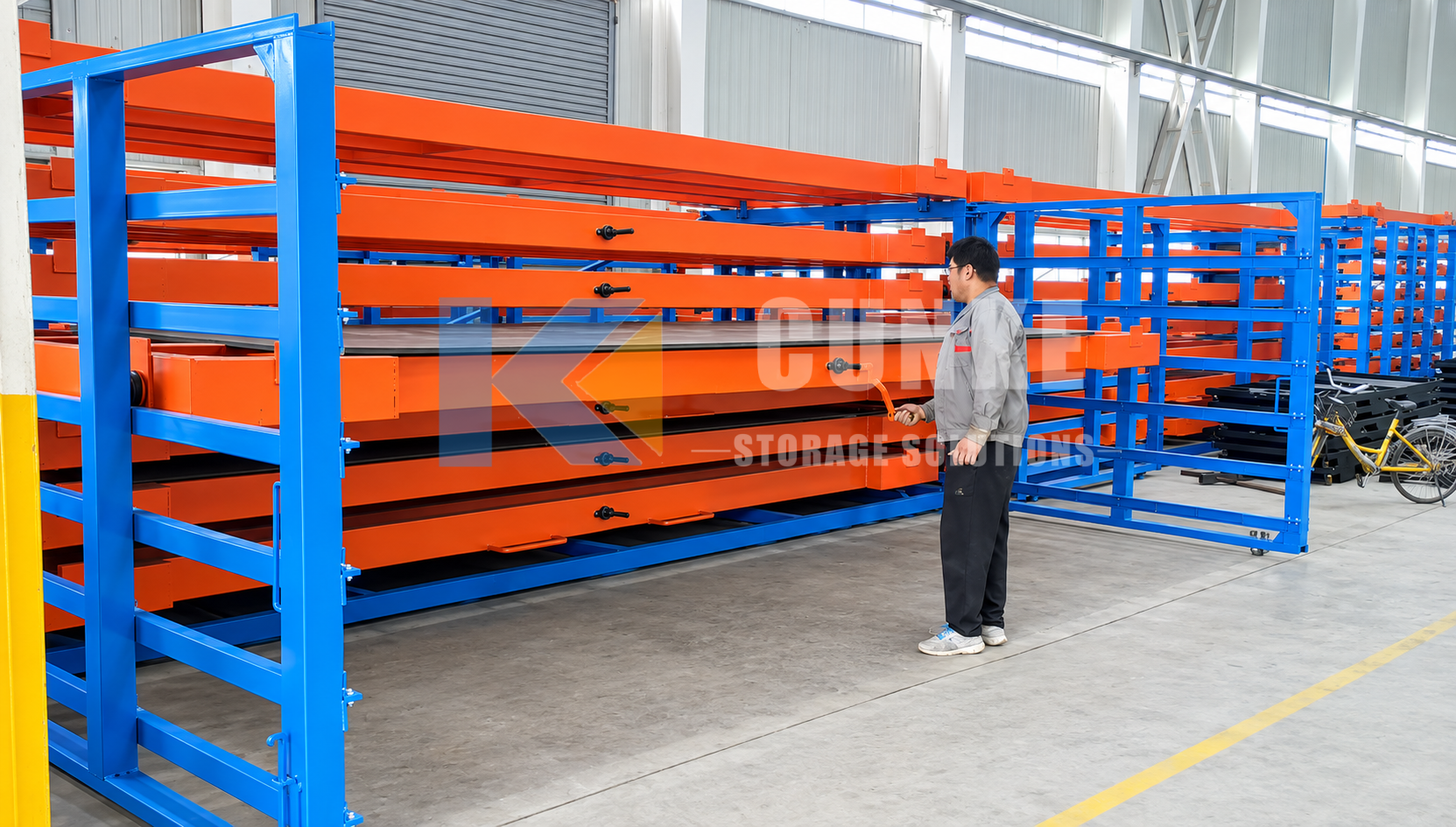
What You’ll See Before You Pay the Balance
At CK Metal Storage, before we ask for the remaining 50%, every order goes through the following:
Full Assembly in Our Factory
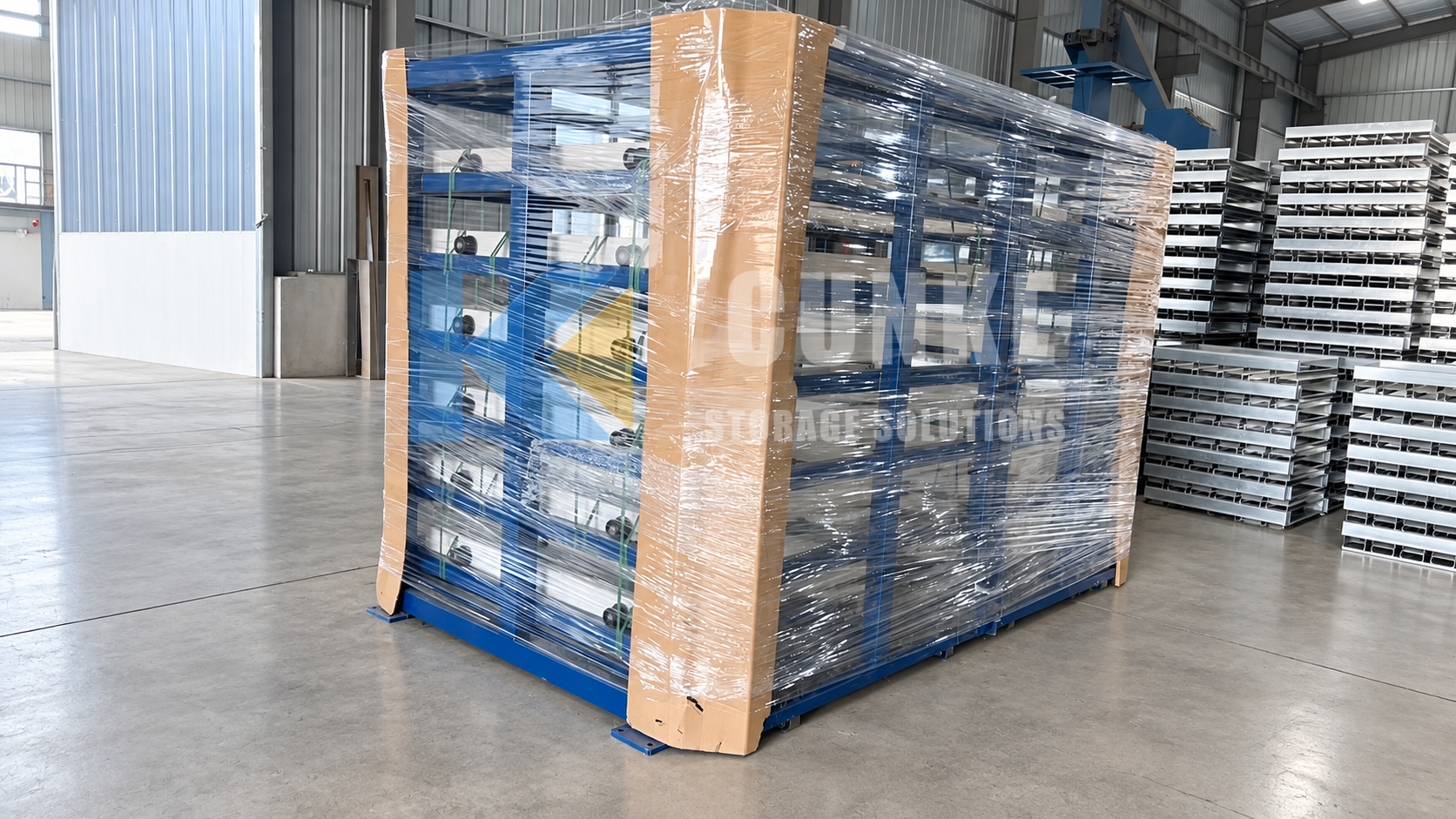
We don’t ship flat-packed and hope it fits together on your end. The entire rack — every arm, every drawer, every motorized component — gets assembled in our workshop and photographed from multiple angles. You’re seeing the actual unit that goes in the container.
Load Testing
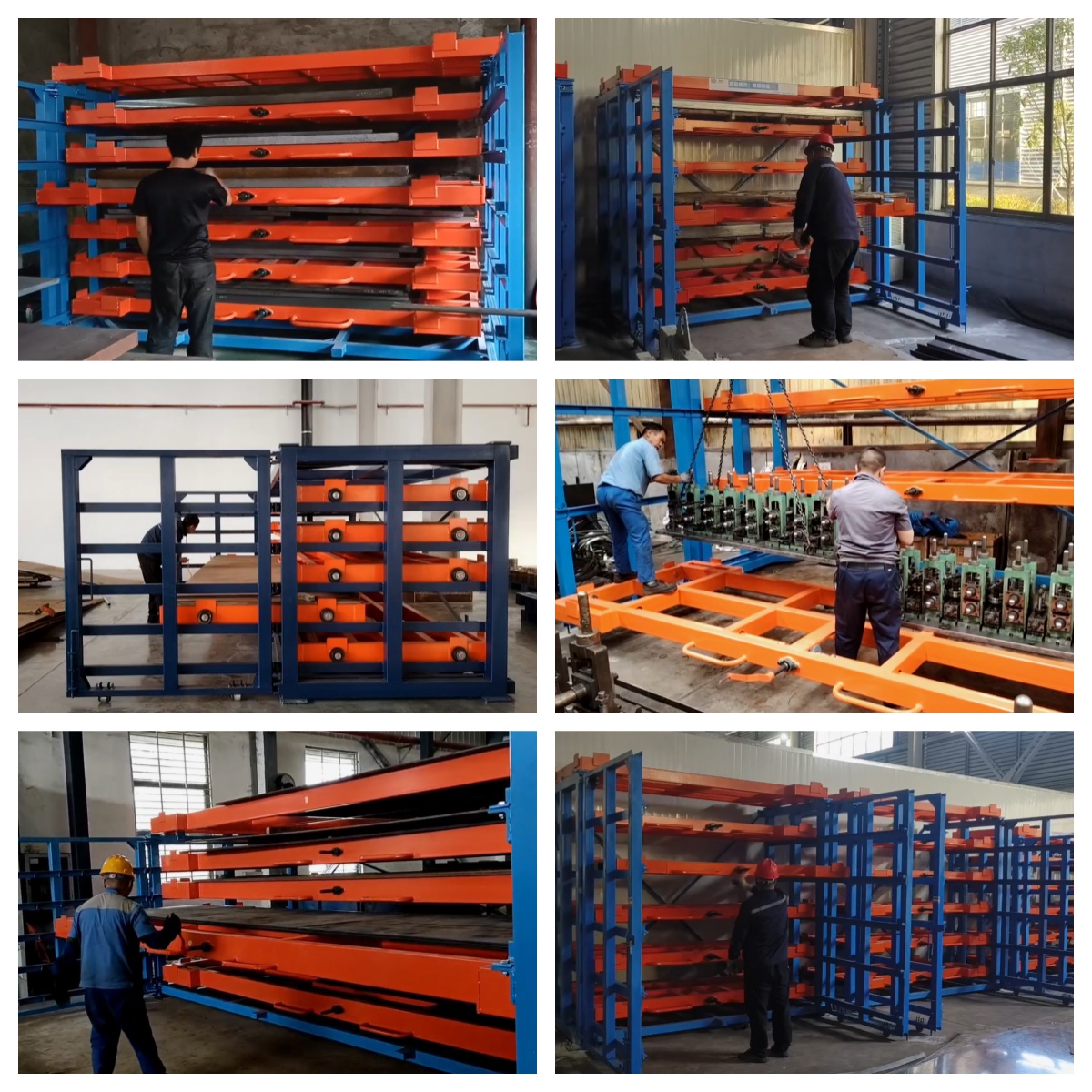
Each rack is tested with weight to verify structural integrity before it leaves our floor. For sheet metal racks, that means loading the drawers or shelves to confirm they meet the specified capacity — typically 3,000–7,000 kg per tier depending on the model.
Photo and Video Documentation Sent to You
You’ll receive a full photo set and a walkthrough video of the assembled unit. Our sales team goes through these with you directly. If anything looks off — a color mismatch, a dimension question, a component you don’t recognize — that’s the moment to flag it.
Third-Party Inspection (If You Want It)
You can arrange a V-TRUST, SGS, or Bureau Veritas inspection at our factory before shipment. The inspector shows up, verifies the unit against your purchase order, and issues a report. You get an independent, professional opinion — not just our word for it.
CK Metal Storage cooperates fully with all third-party inspections. We don’t charge additional fees for access, and we don’t put time pressure on inspection scheduling.
Why Do Manufacturers Ask for 50% Upfront in the First Place?
This is worth understanding, because it explains why T/T 50/50 exists — and why it’s not a red flag.
Custom industrial equipment is not an off-the-shelf product. When you order a motorized sheet metal rack from CK Metal Storage, we’re fabricating steel to your exact dimensions, sourcing motors and components to your spec, and dedicating production capacity to your order.
The 50% deposit covers:
- Raw material procurement (steel plate, structural steel, motors, chain drives)
- Production scheduling and labor allocation
- Components that can’t be returned or repurposed if an order falls through
Without a deposit, a custom manufacturer carries the full production cost on credit extended to a buyer they’ve never met. That’s not viable for either side — it pushes prices up for everyone.
The 50% structure balances the commitment: you put in enough to cover materials and early production costs; we put in the production work. Then you see the product before paying the rest.
How T/T 50/50 Compares to Other Payment Methods
To put this in context, here’s how the most common B2B international payment methods stack up:
| Payment method | Buyer protection | Complexity | Best for |
| T/T 50/50 (CK standard) | ✅ Quality confirmed before final payment | Low | Custom industrial equipment |
| Letter of Credit (L/C) | ✅ Bank-guaranteed | High — fees, strict docs | Very large orders, new markets |
| 100% upfront | ⚠️ Paid before production starts | Low | Small commodity items |
| 100% after delivery | ✅ Maximum buyer protection | Low | Local / domestic only; rare in export |
T/T 50/50 sits in a practical middle ground: straightforward to execute, with meaningful buyer protection built into the workflow — not just into the paperwork.
Letter of Credit (L/C) offers bank-level guarantees but adds significant cost and administrative complexity, and requires both parties’ banks to be involved. For most buyers purchasing custom racking equipment in the $5,000–$50,000+ range, T/T is the faster, leaner choice — as long as the supplier’s QC process is transparent. Ours is.
The Paper Trail That Makes This Traceable
One more layer of reassurance worth mentioning: cross-border manufacturing transactions don’t happen in a vacuum.
When you wire funds to CK Metal Storage, you’re transacting with a registered entity — business license, tax ID, and export credentials all on file. The transaction goes through your bank and ours, creating a documented record on both ends.
After shipment:
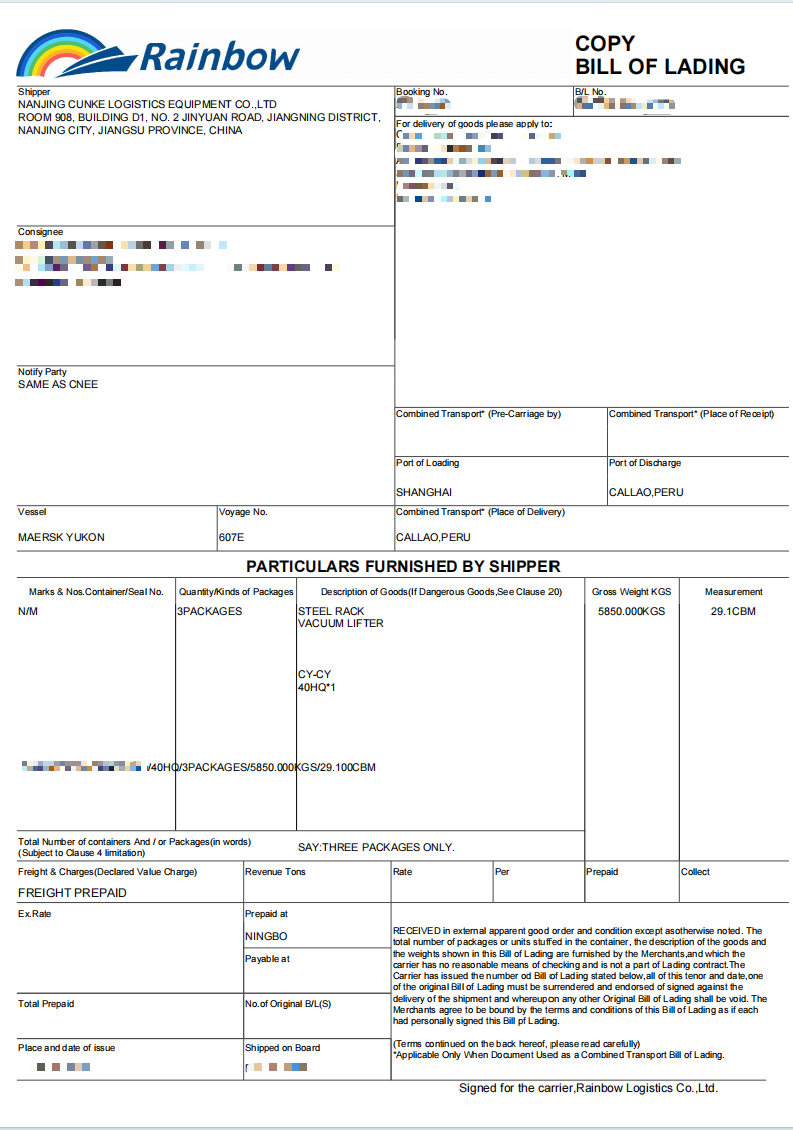
- The freight forwarder issues a Bill of Lading (B/L) — a legal document proving the goods were loaded
- Chinese Customs records the export — public, searchable, tied to the HS code and declared value
- The shipping line tracks the container from port to port
This is not an anonymous cash transaction. Every step leaves a record. That’s a meaningful difference from the horror stories you might have read about online — those cases typically involve wire transfers to individuals, platforms with no accountability, or suppliers who exist only as a website.
Frequently Asked Questions
Q: What if I pay the balance and the goods never ship?
A: By the time you’ve paid the balance, goods are already assembled, documented, and approved by you. The shipment booking is typically already in progress. The scenario where a legitimate manufacturer takes your balance payment and then doesn’t ship has no financial logic — they’ve already invested in production and need to recover that cost. More practically: the transaction is bank-documented, the business is registered, and Chinese export records will show whether goods left the country.
Q: Can I really arrange a third-party inspection before paying the balance?
A: Yes — and we encourage it. CK Metal Storage works with V-TRUST and other internationally recognized inspection agencies. You can arrange this through the agency directly. We’ll coordinate factory access and provide the documentation they need. The inspection report is yours to keep, regardless of outcome.
Q: What if the product doesn’t match my spec after I’ve paid the deposit?
A: That’s what the pre-shipment review is for. If the assembled product doesn’t match the approved drawings and spec sheet, we work with you to resolve it before you pay the balance or before shipment — not after. This is why we do full assembly and documentation before asking for the final payment.
Q: Do you accept Letters of Credit?
A: We don’t currently process L/C transactions. For buyers who require bank-level payment guarantees, we recommend looking at the third-party inspection route combined with T/T, which achieves a similar level of verification without the administrative overhead of L/C. If your procurement policy requires L/C and there’s no flexibility, we’d suggest discussing it with us directly — large-volume or long-term partnerships sometimes have more options.
Q: Is 50/50 T/T the standard in the industry?
A: Yes. For custom-manufactured B2B equipment sourced from China, T/T with a 30–50% deposit and balance before or against shipping documents is the most common structure in the industry. It’s used by manufacturers across sectors — furniture, machinery, metal fabrication, and industrial storage. The specific split and timing varies, but the logic is the same: deposit to start, balance when the product is confirmed ready.