
Storing sheet metal incorrectly leads to injuries, damaged material, and wasted space. This guide explains how to store sheet metal safely in real factory and warehouse environments—based on thickness, size, handling method, and access frequency.
Why Sheet Metal Storage Safety Matters
Sheet metal sheets are heavy, sharp-edged, and often unstable when stacked incorrectly.
Unsafe storage commonly causes:
- Edge cuts and hand injuries
- Sheet collapse or sliding accidents
- Forklift tipping or load imbalance
- Surface damage (scratches, deformation, corrosion)
- Inefficient picking and wasted floor space
In many factories, storage accidents don’t happen during lifting — they happen during access.
Safe sheet metal storage is not just about weight capacity. It’s about stability, access control, and repeatability.
Step 1: Identify Your Sheet Metal Storage Risk Factors
Before choosing any storage method, evaluate these four factors:
- Sheet Size & Weight
- Standard sheets: 3000 × 1500 mm
- Oversized sheets: 4000 mm or longer
- Thickness range: thin (<3 mm) vs thick (>6 mm)
Larger and thinner sheets are more prone to bending and sliding.
- Access Frequency
- Occasional access (few times per week)
- Frequent access (multiple times per shift)
Frequent access dramatically increases accident risk if sheets are stacked.
- Handling Equipment
- Forklift only
- Overhead crane
- Vacuum lifter / magnetic lifter
The storage system must match the handling method, not the other way around.
- Storage Environment
- Indoor / outdoor
- Humidity and corrosion risk
- Traffic density (people + forklifts)
Common Sheet Metal Storage Methods (and Their Safety Risks)
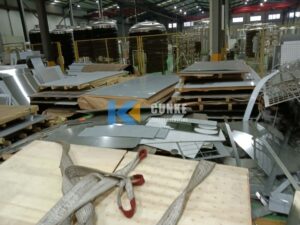
- Floor Stacking (High Risk)
Description:
Sheets stacked directly on pallets or wooden blocks.
Main risks:
- Sheet sliding during picking
- Unstable stacks after partial removal
- No edge protection
- High injury probability
When it’s acceptable:
- Very low volume
- Temporary storage only
Verdict:
Not recommended for safe long-term storage.
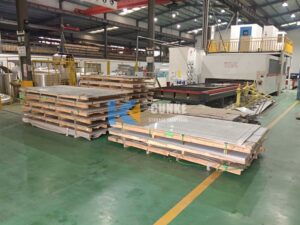
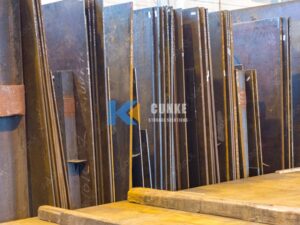
Description:
Sheets stored upright in slots.
Advantages:
- Space saving
- Good visual identification
Safety concerns:
- Risk of sheets tipping
- Requires strict load limits
- Safer for thick plates than thin sheets
Best for:
- Thick steel plates
- Low access frequency
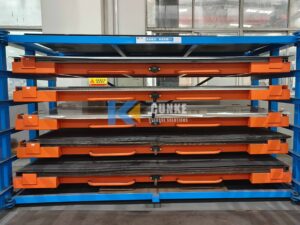
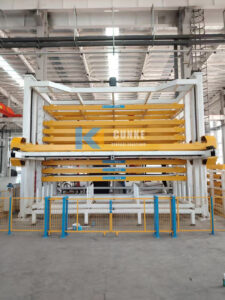
- Roll-Out Sheet Metal Racks (High Safety)
Description:
Sheets stored horizontally on pull-out drawers.
Why they are safe:
- Each drawer supports the full sheet weight
- No stacking on top of each other
- Operator accesses one drawer at a time
- Sheets remain supported during picking
Key safety benefits:
- Minimal manual handling
- Reduced edge exposure
- Stable center of gravity
Best for:
- Thin to medium thickness sheets
- Frequent access
- Forklift or crane loading
- Automated Sheet Metal Tower Systems (Maximum Safety)
Description:
Automated vertical towers with controlled infeed/outfeed.
Why they are safest:
- No human entry into storage zone
- Controlled movement and positioning
- Integrated safety interlocks
- FIFO or controlled access logic
Additional benefits:
- High density storage
- Excellent material protection
- Ideal for laser cutting lines
Best for:
- High-value sheet metal
- High throughput environments
How to Choose the Safest Storage Method
| Condition | Recommended Storage |
| Thin sheets, frequent access | Roll-out rack |
| Thick plates, low access | Vertical rack |
| High automation, high volume | Sheet metal tower |
| Temporary storage only | Floor stacking (with precautions) |
Safety Best Practices for Sheet Metal Storage
Regardless of the system used, follow these rules:
✔ Avoid Overloading
- Never exceed rated load per level
- Uneven loading increases tipping risk
✔ Keep Access Zones Clear
- Mark forklift and operator zones
- Avoid mixed pedestrian traffic
✔ Train Operators
- Correct drawer extension sequence
- Safe lifting points
- Emergency stop awareness
Frequently Asked Questions (FAQ)
Q. Is stacking sheet metal on pallets safe?
A. Stacking can be acceptable short-term, but it significantly increases risk during access and is not recommended for frequent picking.
Q. What is the safest way to store thin sheet metal?
A. Roll-out racks or automated tower systems provide full support and controlled access, minimizing bending and sliding.
Final Thoughts: Safety Is a System, Not a Rack
Safe sheet metal storage is the result of:
- Correct storage structure
- Matching handling equipment
- Clear operating procedures
The safest warehouses don’t rely on operator skill alone — they rely on systems that make unsafe behavior impossible.
If your operation involves frequent sheet handling, investing in a proper storage solution reduces accidents, material damage, and long-term costs.
Call Now: ✆ +86 138 5149 1524
Email: info@ckracking.com
Related Reading