
If your order from CK Metal Storage doesn’t fill a full 20ft container, you still have practical options. Orders under 15 CBM can ship via LCL (less-than-container-load) or consolidate into another supplier’s outbound container. Orders over 15 CBM are better suited for a dedicated FCL — and you can fill the remaining space with handling equipment or invite other Chinese suppliers to co-load at our factory. Here’s how each path works.
You Found the Right Rack. Now Comes the Shipping Question.
You’ve spec’d out the rack, confirmed the load capacity, and you’re ready to move forward. Then comes the question that trips up a lot of first-time importers: “My order is only 1 or 2 units — do I really need a full container?”
The short answer is no. But how you ship it depends on one number: the total volume of your order in cubic meters (CBM). Everything else follows from there.
Step One: Figure Out Your CBM
Before anything else, get the total CBM of your order from us. At CK Metal Storage, every quote — from the very first one — includes the CBM for that configuration. As your order evolves and specs change, we update the CBM alongside the pricing. So by the time you’re ready to book freight, you already have the number you need.
Once you have that number, the decision becomes straightforward.
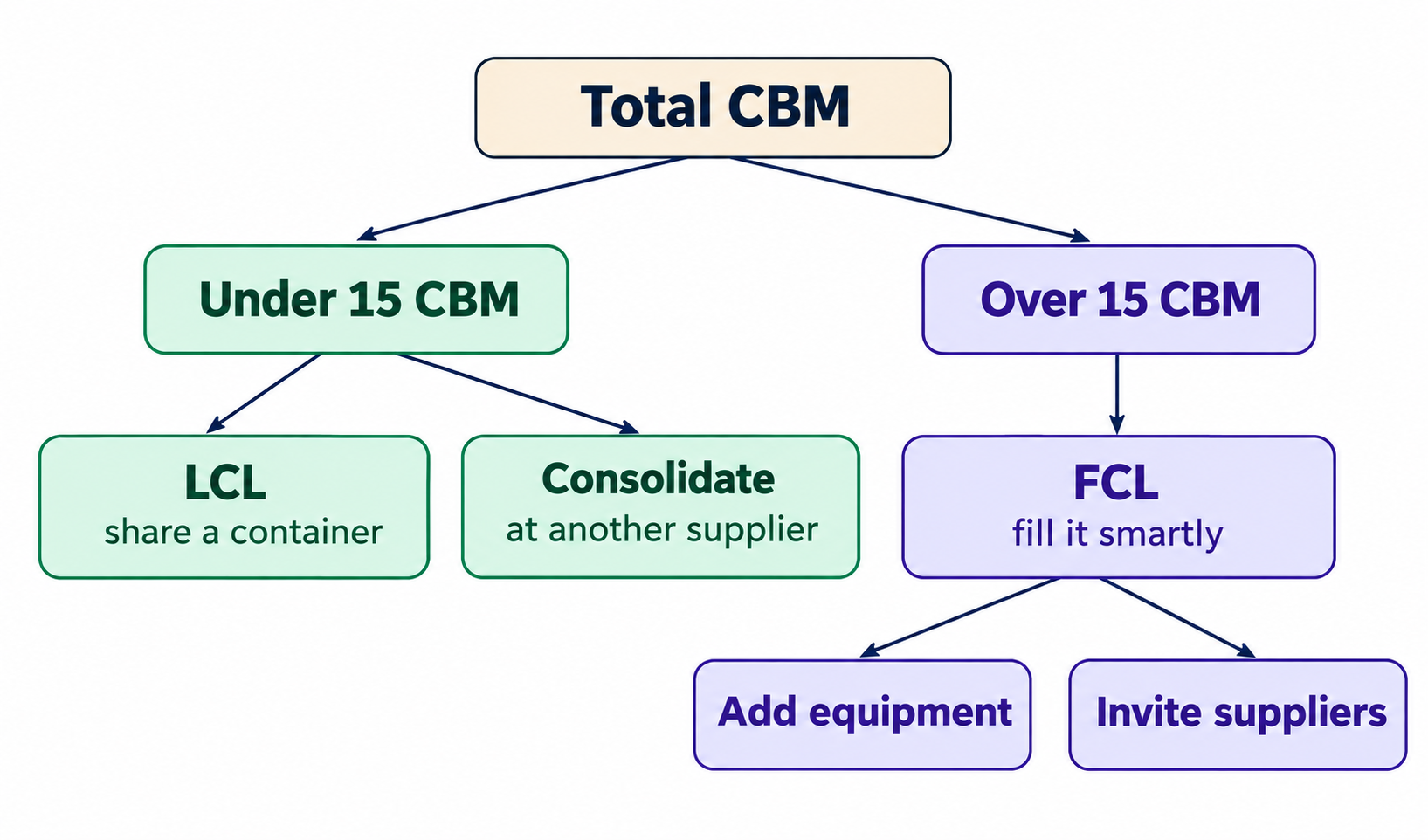
Under 15 CBM? You Have Two Good Options
Option A: Ship LCL (Less-Than-Container-Load)
LCL means your goods share a container with cargo from other shippers. You pay only for the space your order actually occupies — charged per CBM — and the freight forwarder handles the consolidation on their end.
When LCL makes sense:
- You’re placing a trial order and want to keep logistics simple
- Your order is 1 rack units with a total volume well under 15 CBM
- Lead time flexibility exists — LCL typically adds a few more days to transit compared to FCL, due to CFS handling and consolidation scheduling
What LCL actually costs:
LCL freight is charged by CBM, plus CFS (container freight station) handling fees at both origin and destination. Rates vary by destination port and season — when you request a quote from us, we’ll include a shipping estimate alongside the product price so you have the full picture upfront.
The trade-off to know about:
LCL cargo changes hands more often than FCL — it goes through a CFS at origin, gets loaded into a shared container, offloaded at destination CFS, then delivered. Each handoff is a potential touch point. For steel equipment like racks, proper crating is essential. We pack all LCL shipments in reinforced plywood pallets specifically to handle this.
Option B: Consolidate Into Another Supplier’s Container
If you’re already sourcing other equipment or materials from China — laser cutting machines, tooling, raw materials — there’s a good chance one of your other suppliers has an outbound container in the near future.
In that case, we can coordinate delivery of your rack order directly to that supplier’s facility, so everything ships together in one FCL. You pay one set of destination fees instead of two, and your rack travels with cargo you’re already tracking.
How it works in practice:
- You confirm your other supplier has available space and an upcoming shipment
- We arrange domestic trucking from our factory in Nanjing to their location — anywhere in China, no regional restrictions
- Your rack loads alongside their goods, and the combined shipment moves as a single FCL
This option often works out cheaper than LCL for the buyer, and it avoids the CFS handling risk entirely. It just requires a bit of coordination between you and your other supplier on timing
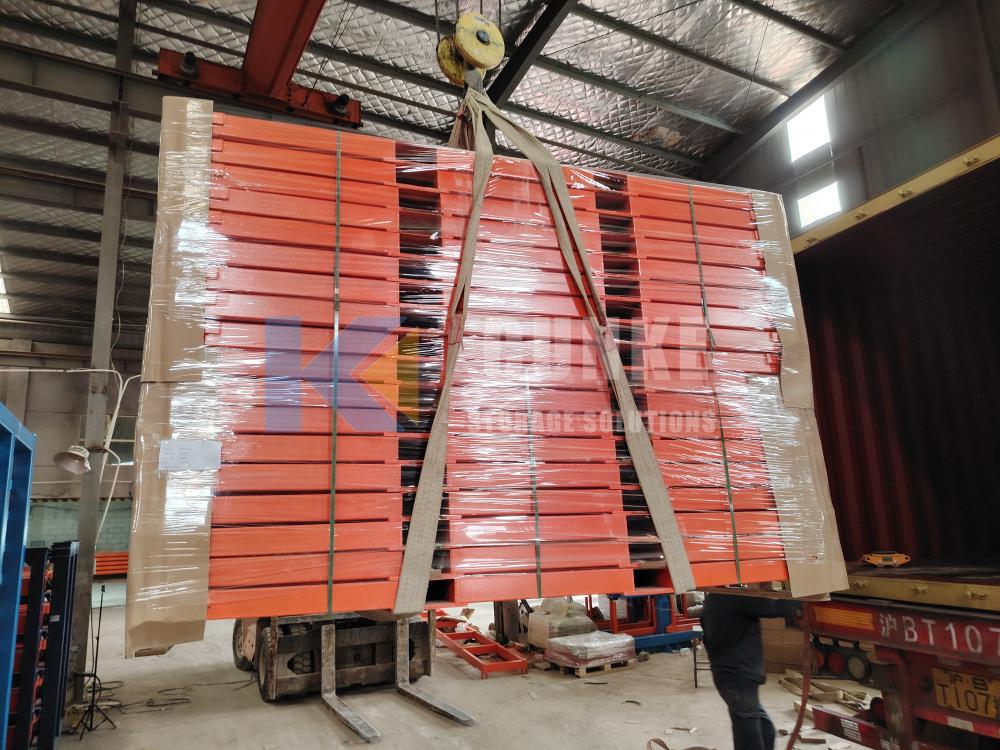
Over 15 CBM? Go FCL — Then Fill It Smartly
A standard 20ft container has roughly 25–28 CBM of usable space. If your rack order comes in above 15 CBM, you’re already more than halfway there — and shipping a half-empty FCL is both wasteful and avoidable.
The better move is to fill the container deliberately, so you’re getting full value from the freight cost you’re already paying.
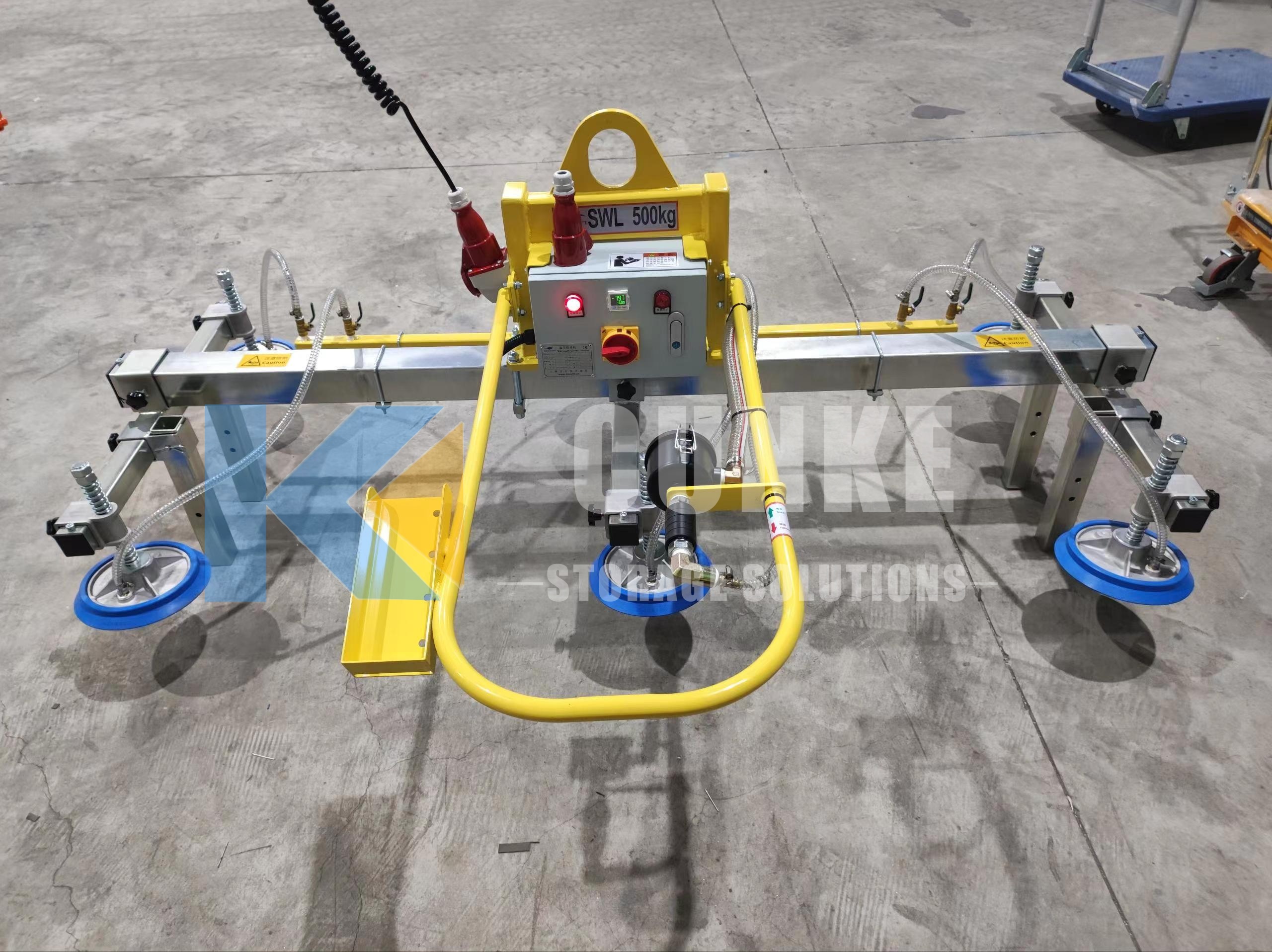
Fill Strategy 1: Add Handling Equipment
If you’re buying a sheet metal rack, there’s a good chance you also need the equipment to work with it. Most of our customers who invest in proper racking also need at least one of the following:
- Vacuum lifter — for safely handling sheet metal without manual lifting; reduces injury risk and speeds up material flow significantly
- Jib crane — a wall-mounted or column-mounted crane that works directly alongside your rack for loading and unloading sheets
- Depalletizer — for separating stacked sheets efficiently, especially useful in high-volume laser cutting environments
These are all products we manufacture and can ship in the same container. Ordering them together doesn’t just fill your container — it means one shipment, one customs entry, one delivery. And you arrive with a complete system instead of waiting for a second order to come in six weeks later.
Fill Strategy 2: Invite Other Chinese Suppliers to Co-Load at Our Factory
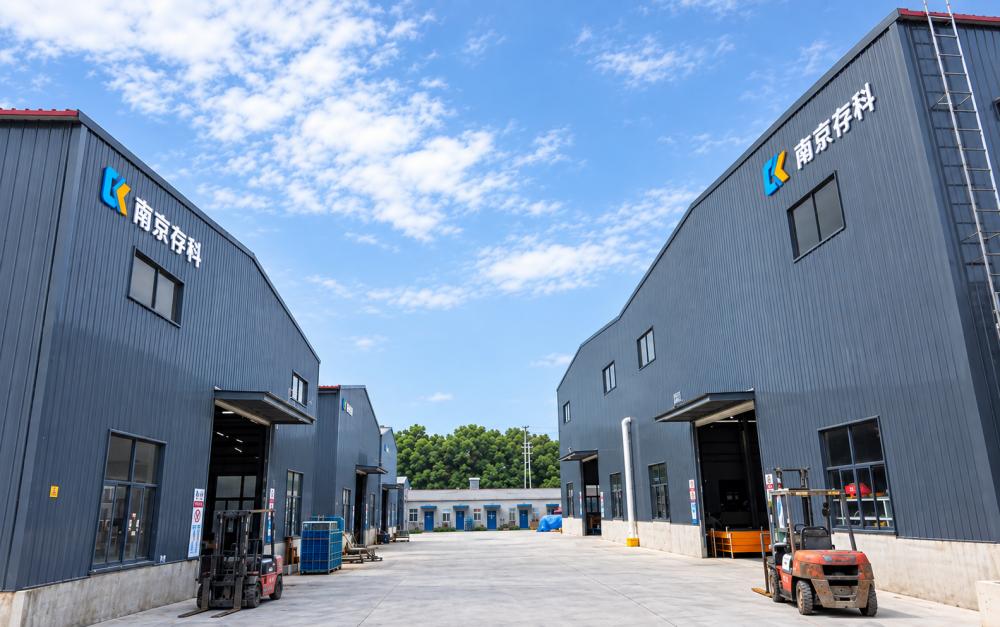
If you have other suppliers in China — for tooling, consumables, machinery parts, or anything else — they can send their goods to our factory in Nanjing, and we’ll consolidate everything into your FCL before it ships.
There’s no geographic restriction on this. Whether your other supplier is in Guangdong, Shandong, or Zhejiang, domestic freight to our factory is straightforward to arrange, and the cost is typically far lower than the savings from combining the container.
In most cases, the domestic trucking cost to bring another supplier’s goods to our factory is significantly less than what you’d pay for a separate LCL or FCL shipment at the destination end. The net result: one container, one customs clearance, one delivery.
We handle the receiving, warehousing, and loading coordination at our end. You just need to coordinate with your other suppliers on timing.
Side-by-Side: Which Option Is Right for You?
| LCL | Consolidation (Other Supplier) | FCL + Fill with Equipment | FCL + Co-load at CK Factory | |
| Best for | Small orders, trial shipments | Buyers with other active Chinese suppliers | Buyers who need handling equipment | Buyers with multiple Chinese suppliers |
| CBM range | Under 15 CBM | Any | Over 15 CBM | Over 15 CBM |
| Cost efficiency | Moderate | High | High | High |
| Transit time | Slightly longer | Same as other supplier’s FCL | Standard FCL | Standard FCL |
| Coordination needed | Low | Medium | Low | Medium |
| Cargo handling risk | Slightly higher (CFS touchpoints) | Low | Low | Low |
What CK Metal Storage Handles for You
Whichever path you choose, we take care of the export side:
- Export packaging
- Export customs declaration and documentation
- Domestic trucking coordination (for co-load arrangements)
- Loading and strapping inside the container
What you’ll arrange on your side: the freight forwarder from the origin port to your destination, and import customs clearance at your end. If you don’t have a forwarder yet, we’re happy to recommend ones we’ve worked with — just ask.
FAQ
Do I need a full container to order from CK Metal Storage?
No. We’ve served 2,600+ customers across the manufacturing industry, and a significant number of those started with a single-unit trial order. The minimum order is based on the product, not the container size. LCL and consolidation options are available regardless of order volume.
What’s the difference between LCL and FCL shipping?
LCL (less-than-container-load) means your cargo shares a container with other shippers’ goods. You pay per CBM. FCL (full container load) means you book an entire container — either a 20ft (~25–28 CBM usable) or 40ft (~55–58 CBM usable). FCL is typically cheaper per CBM once you’re above 15 CBM, and it involves fewer cargo handling touchpoints.
How do I know the CBM of my order before placing it?
When you request a quote from us, we’ll include the packed CBM in the quotation. You don’t need to calculate it yourself — just share your requirements and we’ll give you the full shipping specs upfront.
Can other Chinese suppliers really send goods to your factory for consolidation?
Yes. We receive goods from other suppliers regularly for co-load arrangements. There are no regional restrictions — suppliers from anywhere in China can arrange domestic trucking to our factory in Nanjing. Contact us early to confirm timing, since we need to align loading schedules.
What handling equipment makes sense to add to fill a container?
The most common add-ons are vacuum lifters (for safe sheet handling), jib cranes (for loading/unloading at the rack), and depalletizers (for separating stacked sheet metal from the wood skids). All these can be quoted and shipped with your rack order without any additional supplier coordination.
How long does LCL shipping take compared to FCL?
Transit time for the ocean leg is the same. The difference is at the CFS (container freight station) — LCL cargo typically adds more days for consolidation at origin and deconsolidation at destination.
Is my rack properly protected in an LCL shipment?
Yes. All our LCL shipments are packed in reinforced plywood pallets designed for steel equipment. We take transit protection seriously. And the pallet will be covered by cardboard then rapped tightly with stretch film.