
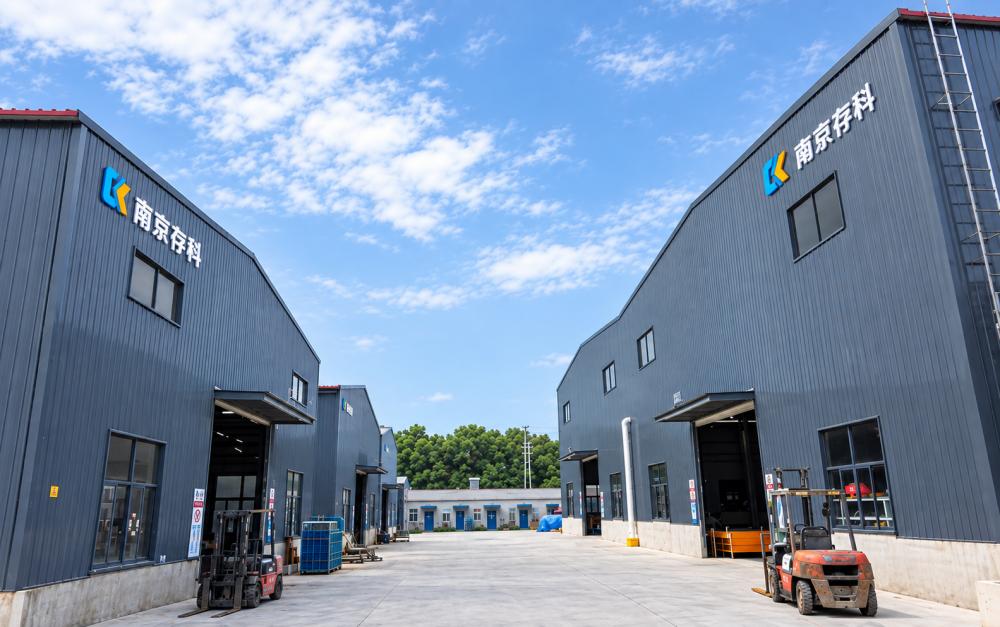
For many buyers, seeing is believing. Before committing to a storage rack supplier — especially one on the other side of the world — it makes sense to want to show up in person, walk the floor, and ask the hard questions face to face. We get that. That’s why we keep our factory doors open.
This post walks you through everything you need to know: what you’ll see during the visit, how to prepare so you get the most out of it, what we need from you before you arrive, and how to get here.
Why We Invite Buyers to Visit
A lot of manufacturers say they welcome factory visits. What that usually means is: sure, come if you must, we’ll find someone to walk you around.
That’s not how we think about it.
At CK Metal Storage, a factory visit is one of the most productive things we can do together. When a buyer walks through our production floor, they stop wondering about lead times, capacity, and quality control — they can see it directly. And we get something equally valuable: a much clearer picture of your actual storage challenge, which means a much better proposal from our side.
We’ve hosted buyers from Australia, New Zealand, Canada, Colombia, Malaysia, Indonesia, the UK, and the UAE. Every visit is different, because every buyer’s situation is different. The visits that go best are always the ones where both sides come prepared.
What You’ll See During Your Visit
We don’t do selective tours. If you come to Jurong, you’ll walk through the full facility.
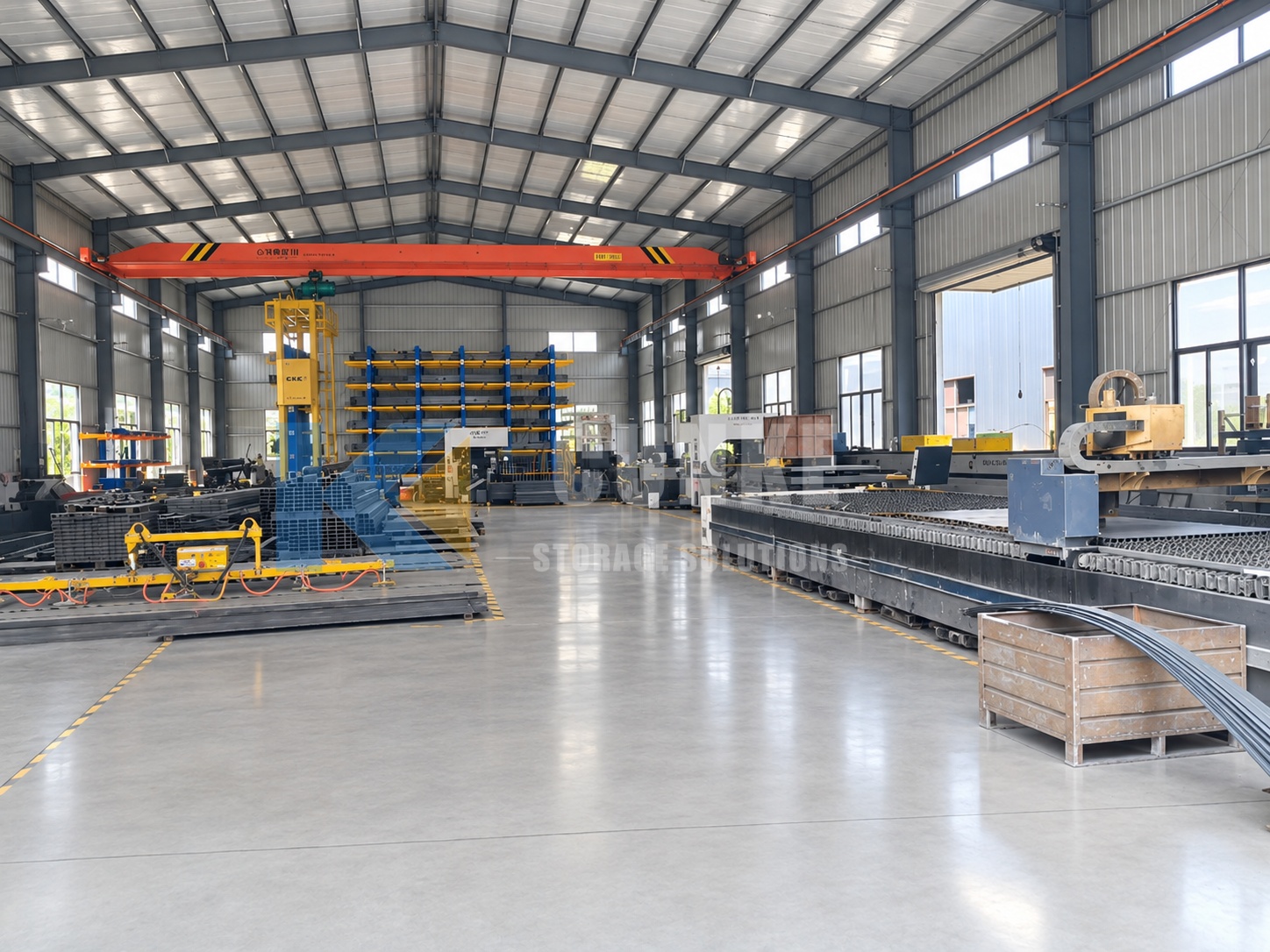
Production workshops — You’ll see how our racks are cut, welded, assembled, and finished. If we have orders in production similar to what you’re considering, we’ll point those out so you can assess quality firsthand — not from a brochure, but from a unit actively being built.
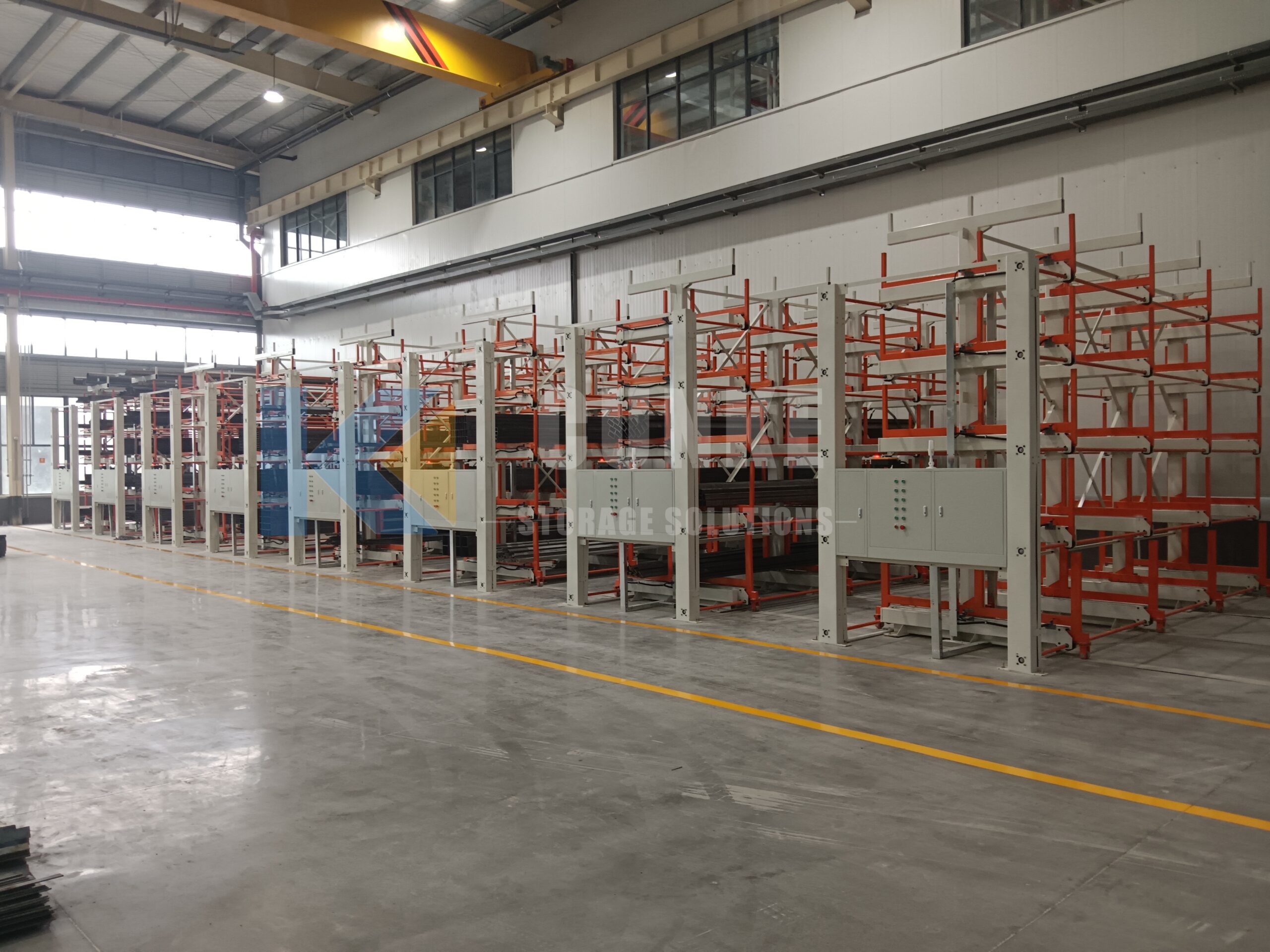
Sheet metal storage racks in use — Our own factory uses the same equipment we sell. You’ll see pull-out racks, motorized systems, and cantilever racks functioning in a real industrial environment. This matters because you can see how the mechanisms behave under load, how much floor space each system needs, and how quickly an operator can access material.
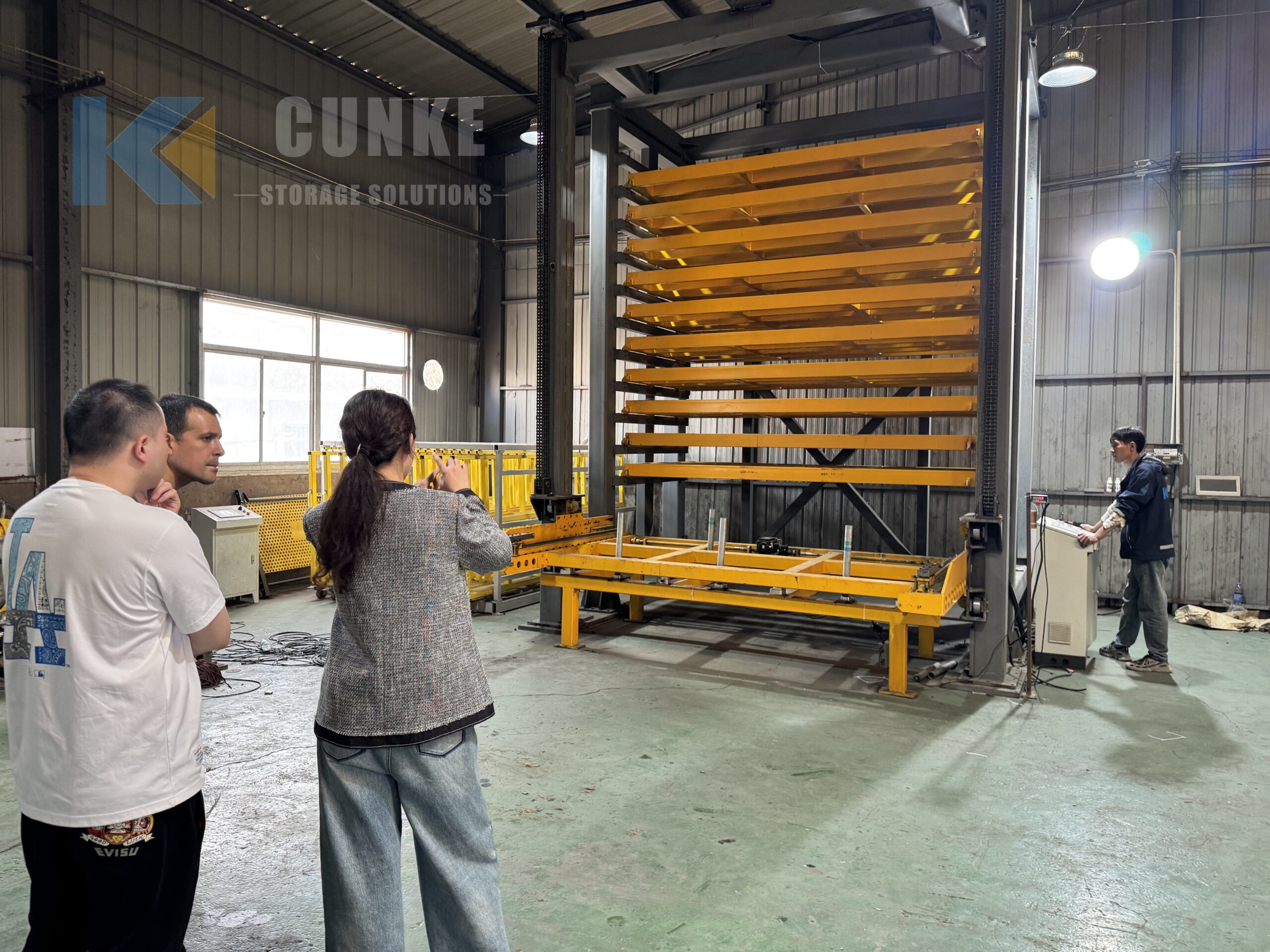
Surface finishing area — Our powder coating line is part of every tour. This is where most questions about finish durability and color consistency get answered on the spot.
Assembly and QC area — We’ll walk you through how finished units are inspected before they ship, including load testing and dimensional checks.
After the floor tour, we move to our meeting room to go over your specific requirements — dimensions, load capacity, workflow, budget, and timeline. That’s where the real work happens.
How to Prepare for a More Useful Visit
A factory visit is only as good as the conversation it generates. The buyers who leave with a concrete proposal in hand are almost always the ones who arrived with a clear picture of their own situation.
Here are the questions worth thinking through before you get on the plane:
What are your floor dimensions and ceiling height? Knowing your ceiling height in particular opens up or closes off a lot of options — the difference between a 5-meter and an 8-meter ceiling can completely change which system makes sense for you.
How do you currently handle material — forklift, crane, or manual? This shapes everything from the rack type to the aisle width to the loading mechanism. If you’re looking to change your handling method as part of the upgrade, that’s worth mentioning too.
What material are you storing, and what’s the maximum sheet size or profile length? For sheet metal, we need to know the largest sheet dimensions you handle regularly. For steel profiles, the key figure is the longest piece. These numbers directly determine the rack depth, drawer length, and structural requirements.
What’s the main problem you’re trying to solve? Is it running out of space? Spending too much time retrieving material? Damage from improper storage? Safety concerns? Knowing the primary pain point helps us prioritize and focus the proposal on what actually matters to you.
Are there any hard constraints — budget range, timeline, or local regulations? We’d rather know upfront. It saves everyone time and makes the proposal we put together far more realistic.
You don’t need answers to all of these before you arrive. But the more you’ve thought them through, the more we can get done in the same amount of time.
What We Need From You Before You Arrive
We ask for a few things in advance — not to create paperwork, but to make your visit genuinely useful from the moment you walk in.
- Your company name and what you do. Knowing whether you’re a fabricator, a distributor, a laser cutting shop, or an end-user helps us pull the right reference projects and product configurations for your meeting.
- Who’s coming and their roles. A visit led by a technical director looks different from one led by a procurement manager. If you’re bringing an engineer, we’ll make sure our technical team is there. Either way, you won’t be handed off to someone who doesn’t know the details.
- A few photos of your current storage area. When we can see your floor space, ceiling height, and how you’re currently handling sheet metal or profiles, we can walk into the meeting with a concrete layout proposal instead of starting from scratch. Clients consistently tell us this is what makes the visit feel worth the trip.
- At least one week’s notice. A week gives us time to prepare relevant samples, pull case studies that match your application, and make sure the right staff are available. If you’re traveling internationally and your schedule is tight, reach out as early as possible — we’ll do our best to accommodate.
A Real Example of How a Visit Can Work
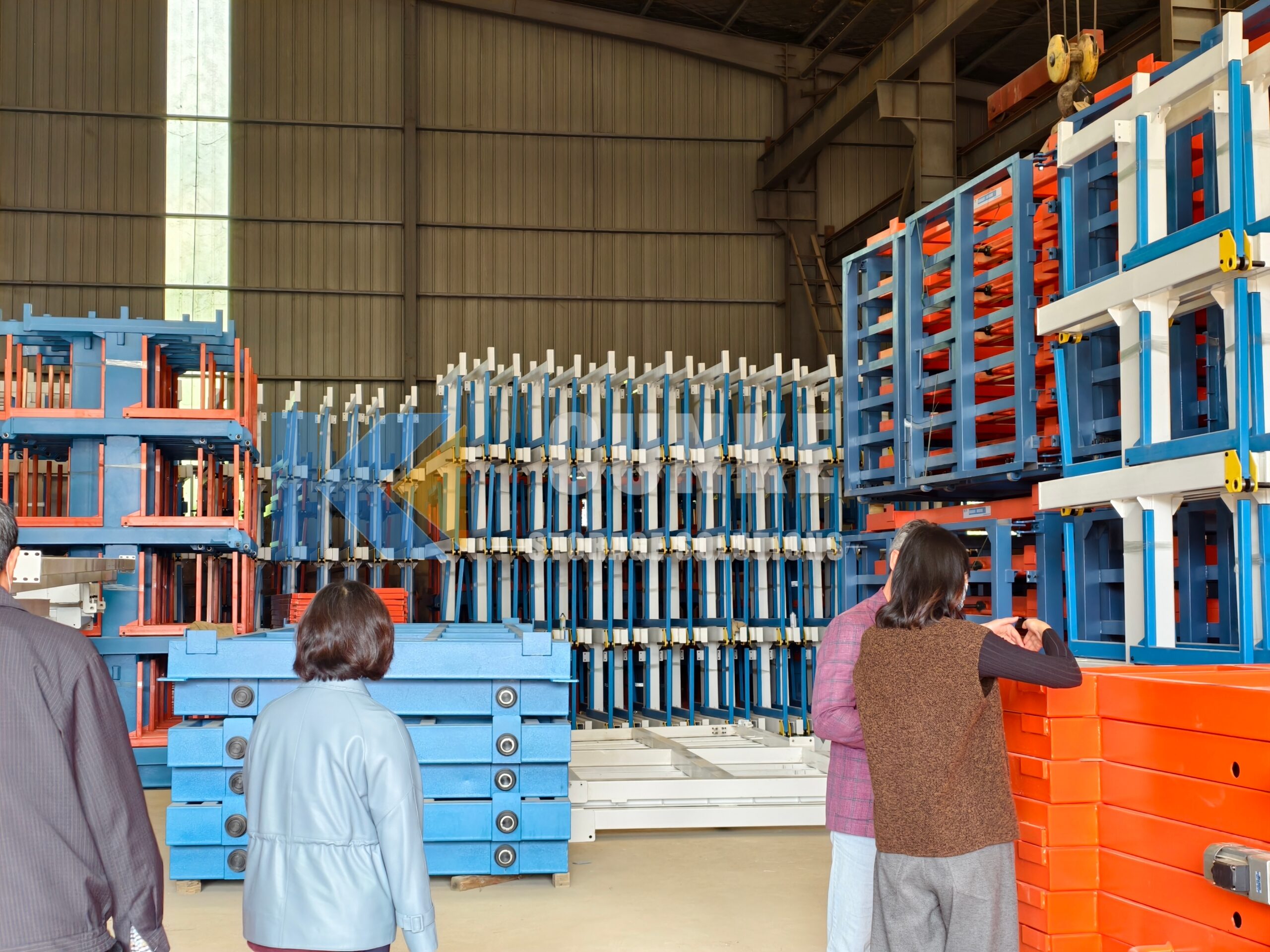
One of our recent visits came from a steel profile fabricator in Australia. Their situation is one we hear fairly often: the workshop was full, relocating to a larger facility was financially off the table, and they were spending too much time — and too much manual labor — retrieving long profiles from a disorganized storage area.
Their three conditions were clear going in: increase storage capacity, reduce manual handling, and do it without moving premises.
After touring our production floor and seeing several cantilever rack configurations in person, we sat down in the meeting room and went through their workshop layout together. Based on their ceiling height, aisle constraints, and the length of the profiles they were handling, we developed a proposal for a customized Motorized Roll-Out Cantilever Rack system — designed to fit their exact floor footprint, with motorized drawers to reduce the physical effort of retrieval and a configuration that roughly doubled their usable storage density within the same space.
The visit gave us what we needed to make that proposal specific and realistic. A quote sent cold — without seeing the space or understanding the workflow — would have been a generic spec sheet. The visit turned it into something actually useful.
Getting to Our Factory
Our setup:
Headquarters (office): Nanjing, Jiangsu Province
Factory: Jurong, Jiangsu Province (Zhenjiang administrative area)
From Nanjing Lukou International Airport (NKG): The most straightforward option is a taxi or ride-hailing service directly from the airport to our factory in Jurong — about 45 to 60 minutes depending on traffic. Alternatively, take a short taxi to Nanjing South Railway Station, then a high-speed train to Jurong Station (approximately 18 minutes), followed by a taxi to our factory. Total journey time either way: roughly 1 to 1.5 hours.
From Shanghai: High-speed trains from Shanghai Hongqiao to Nanjing South run frequently, with a journey time of around 1 hour 15 minutes. From Nanjing South, the connection to Jurong takes about 18 minutes by train.
From other cities in China: Nanjing South Station is a major high-speed rail hub with direct connections from Beijing, Hangzhou, Wuhan, Chengdu, and most major cities. Once you’re at Nanjing South, Jurong is less than 20 minutes away.
When you reach out to arrange your visit, just let us know where you’re traveling from. We’re happy to help with route planning and any other logistics questions.
What Happens After Your Visit
The factory tour is the starting point, not the finish line. Here’s what the process typically looks like after you leave:
Within 2 business days: We send you a summary of what we discussed, along with any open questions we need to clarify before preparing a proposal.
Proposal stage: Based on your floor photos, dimensions, and the conversation from the visit, we put together a layout plan and product recommendation. For more complex or customized requirements — unusual ceiling heights, non-standard material sizes, integration with existing handling equipment — we may go back and forth a few times to get the spec right.
Quotation: Once the spec is confirmed, we issue a formal quotation with lead time, pricing, and payment terms.
There’s no obligation to move forward at any stage. We’d rather you take your time and get the decision right than rush into something that isn’t the right fit.
Frequently Asked Questions
Is the factory visit free?
Yes. There’s no charge for the visit itself, and our English-speaking staff will be with you throughout — no translation fee, no hosting fee.
Do I need to be an existing customer?
Not at all. Most of our visitors are evaluating us for the first time. A factory visit is one of the best ways to decide whether CK Metal Storage is the right supplier for your project.
How long does a typical visit take?
Most visits run between 2 and 3 hours, including the factory tour and the follow-up meeting. If you have a complex project to work through, it can go a little longer. We’ll plan around your schedule.
Can I bring my technical team or engineer?
Absolutely — we encourage it. The more technical the questions, the more useful the visit. Let us know in advance who’s coming so we can have the right people available on our end.
What if my project is still in early stages — is it too soon to visit?
Not at all. Many of our strongest client relationships started with a visit at the “we’re not sure what we need yet” stage. Seeing the products in person and talking through your situation with our team often helps clarify requirements faster than any amount of back-and-forth email. There’s no pressure to place an order.
What countries have your visitors come from?
We’ve hosted buyers from Australia, New Zealand, Canada, Colombia, Malaysia, Indonesia, the United Kingdom, and the UAE, among others. International visits are a routine part of how we work with overseas clients.
What if I can’t visit in person — are there alternatives?
We understand that an in-person trip isn’t always possible. For buyers who can’t make it to Jurong, we offer a factory video tour and can schedule a video call with our technical and sales team to walk through your requirements in detail. That said, there’s no substitute for being here in person — especially when you’re evaluating a significant capital purchase.
Ready to Visit? Here’s How to Get Started
Send us a message through our contact page (ckmetalstorage.com/contact) with:
- Your name and company
- Preferred visit dates
- Number of visitors and their roles
- A brief description of your storage challenge
- Photos of your current storage area, if you have them
We’ll confirm within one business day and start preparing for your visit.
CK Metal Storage has worked with manufacturers across four continents on sheet metal and steel profile storage challenges. A factory visit is the fastest way to find out whether we can solve yours.