To store long materials safely, keep bars, tubes and profiles off the floor in racks that support each bundle along its length and stop round stock from rolling, and load every rack within its rated capacity. Handle them with a crane lifting straight up from a level that is fully out of the rack, or a forklift in an aisle wide enough for the load, and keep people out of the zone under and around the load. The riskiest moments come when someone digs through a pile by hand or drags a bundle out sideways.
What makes long materials dangerous
Long stock has a few hazards that boxes and pallets don’t.
- It rolls and spreads. Round bar and tube move as soon as the stack is disturbed. A pile that looked stable can spread across the floor when one bundle is pulled out.
- It swings. A 6 m (20 ft) bundle on a hook or on forks has a lot of length outside the lifting point. One end can hit a person, a rack upright or a machine while the other end looks fine.
- It is hard to grip. A long bar is too awkward for one person to carry safely, and hands and fingers get caught between bars.
- It overloads racks quietly. A bundle of steel bar can weigh several tonnes, and nobody can see that an arm is overloaded until it bends.
OSHA’s material storage rule covers the basics: stored material “shall not create a hazard,” and it must be “stable and secure against sliding or collapse” (29 CFR 1910.176(b)).
How to store long materials safely
Get it off the floor and into racks
OSHA’s guide to materials handling says to “stack and block poles as well as structural steel, bar stock, and other cylindrical materials to prevent spreading or tilting unless they are in racks” (OSHA 2236, Materials Handling and Storage). Blocking floor stacks works for short-term storage. For stock you pick from every day, a rack is safer, because each bundle sits on its own level and nothing has to be moved to reach it.
Keep racks away from main aisles
The same guide says: “Do not store pipes and bars in racks that face main aisles to avoid creating a hazard to passersby when removing supplies.” A bar that slides off the end of a rack into a walkway can hit someone who has nothing to do with the job.
Stay within the rated load, and spread it out
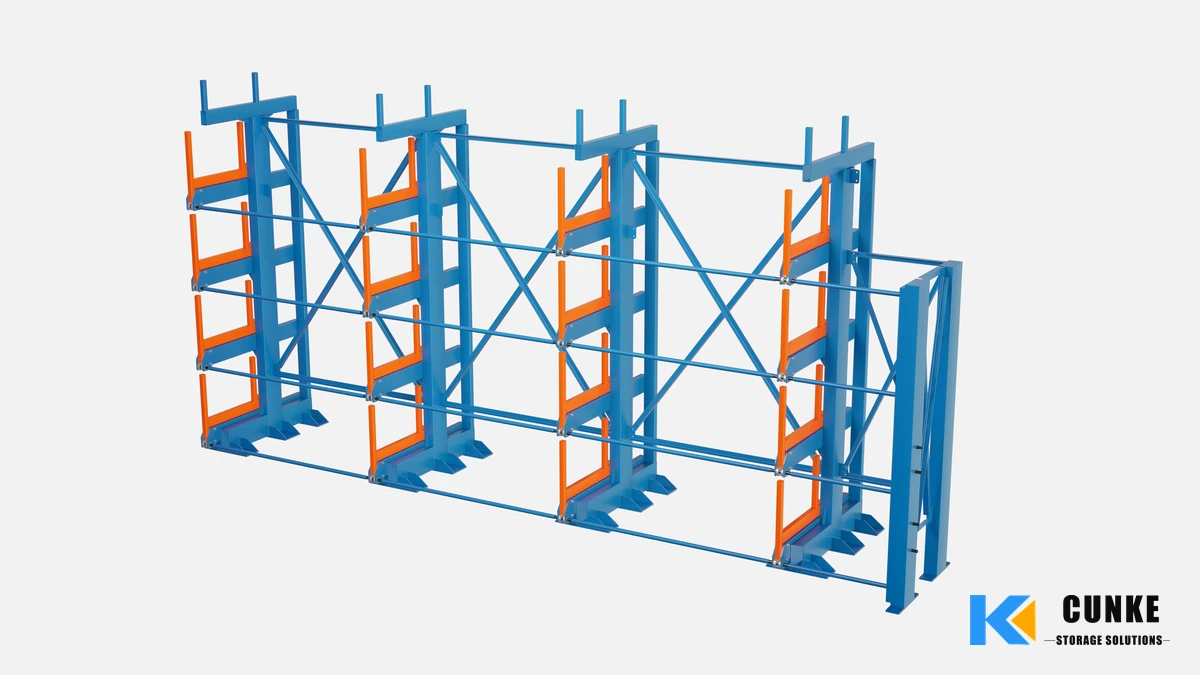
Every arm and every level has a rating. Our roll-out cantilever racks are rated at 750 kg (1,650 lbs) per arm, and the 12 m models carry up to 5,000 kg (11,000 lbs) per level on each side. Spread the bundle across all the arms it rests on, and put a load sign on every level.
Stop round stock from rolling
Divider pins split a level into smaller bays, so round bar and tube can’t roll toward the edge or into the next bundle. They also make it easier to keep one size per bay.
Anchor the rack
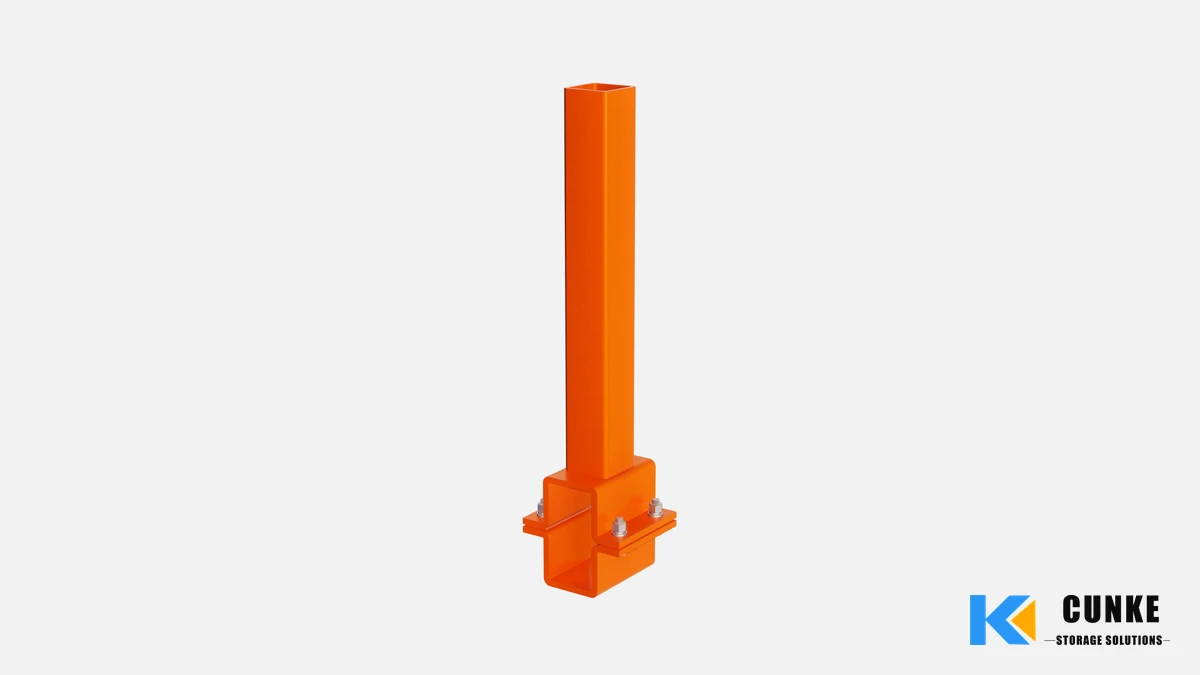
A loaded level that is rolled out moves the center of gravity forward. Our roll-out cantilever racks must be anchored to the floor with expansion bolts, and we don’t recommend free-standing installation even for light loads.
How to handle long materials safely
With an overhead crane
Bring the hook straight over the load. OSHA’s crane rule says the hook “shall be brought over the load in such a manner as to prevent swinging,” the load must not “contact any obstructions,” cranes “shall not be used for side pulls” without approval, and operators should “avoid carrying loads over people” (29 CFR 1910.179(n)(3)).
That is why it matters how the rack presents the load. On a fixed rack, the bundle sits under the arm above, so the crew drags it out sideways. On a roll out cantilever rack, the operator cranks one level fully into the aisle and the crane lifts straight up.
Our operating rules for roll-out cantilever racks:
- Roll out one level at a time. Two levels out at once shifts the weight forward and can tip the rack.
- Once the level is out, the operator steps back, out from under the level and the crane path, before the lift starts.
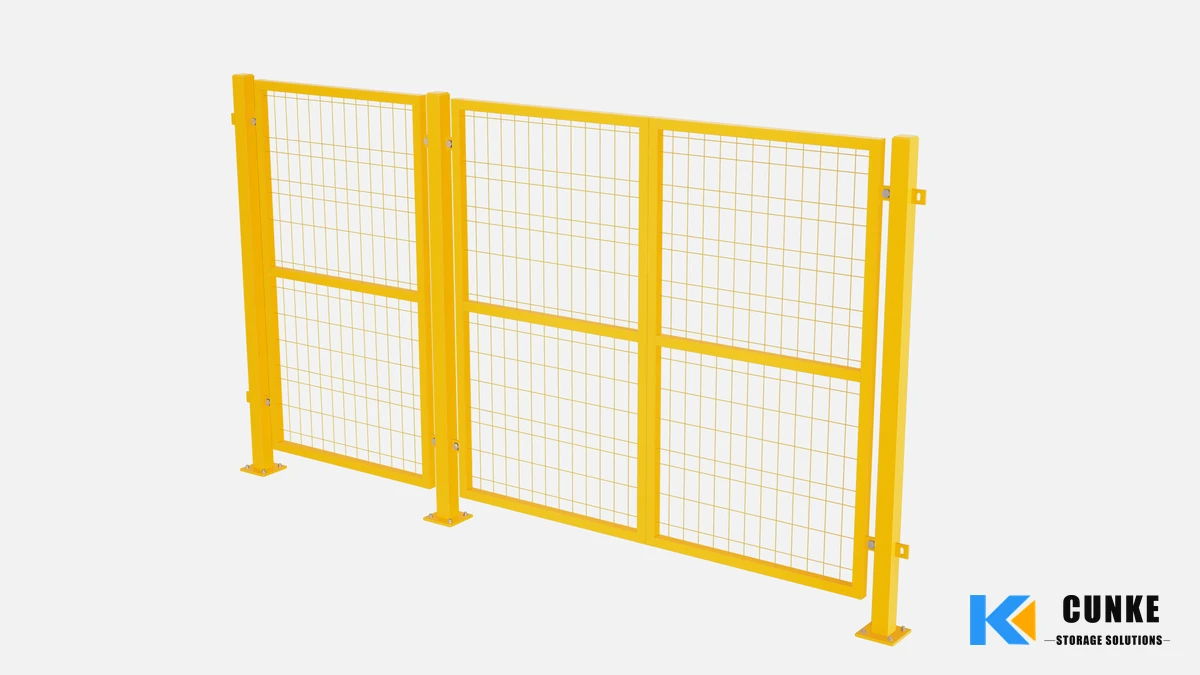
- Mark the roll-out zone on the floor with yellow hatching, so everyone can see where not to stand. Mesh guardrail panels can also be added as a rack accessory.
- Use soft slings or a vacuum lifter on finished surfaces, and chains only on stock that can take them.
With a forklift
Forklifts need wide aisles for long loads. Fixed cantilever racks served by forklifts typically need 4 to 5 m (13 to 16 ft) aisles, while two roll-out cantilever racks can share an aisle of about 1.6 m (5.2 ft) because the crane does the lifting. Our guide on how wide the aisle should be between roll-out cantilever racks has the details.
By hand
Don’t carry long bars alone. OSHA’s guide tells workers to “seek help” when a load “is so bulky that employees cannot properly grasp or lift it” or when they “cannot safely handle a load.” Wear gloves, and keep fingers out from between bars when a bundle is being set down.
Reaching high levels
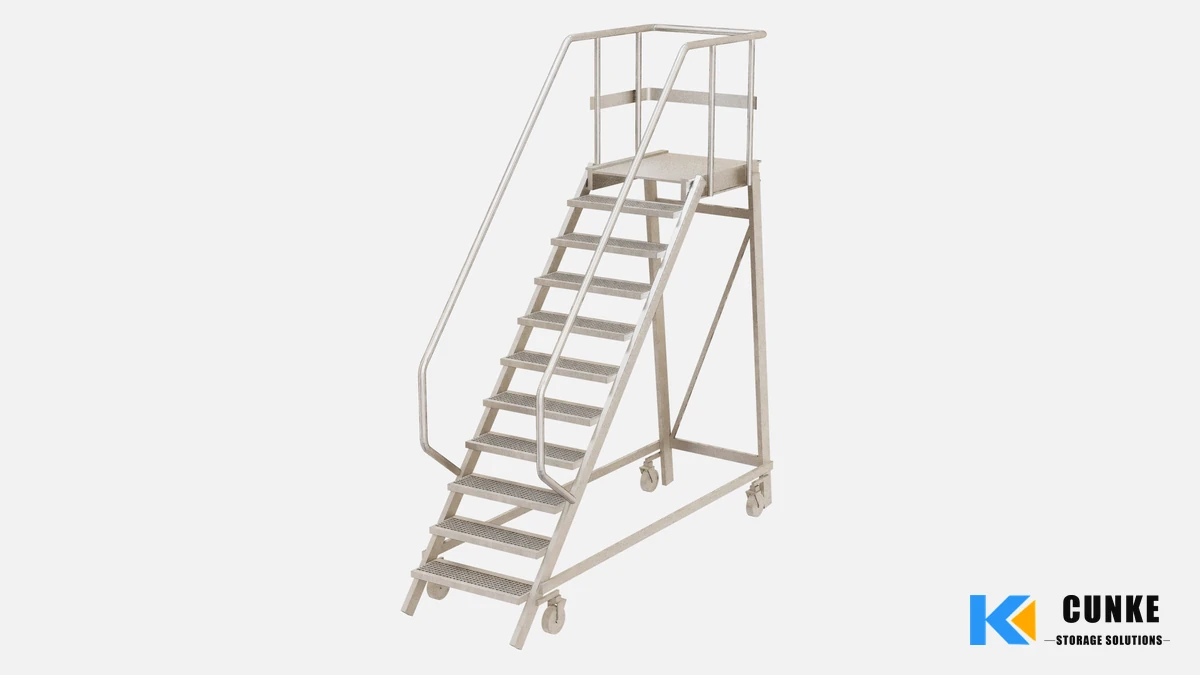
Never climb on rack arms or levels. Use an access ladder with handrails and non-slip steps. On our roll-out cantilever racks, a ladder is required once the rack is taller than 3 m (10 ft), and we recommend keeping the rack under 5 m (16 ft). Above that, operators spend too long on ladders rigging loads at height.
Fixed, roll-out, motorized or automated: how the risk changes
| Setup | Where the risk sits | What reduces it |
| Floor stacks | Rolling stock, digging through piles, manual lifting | Blocking, moving to racks |
| Fixed cantilever + forklift | Forks inside the rack, swinging loads, wide aisles | Trained drivers, aisle rules |
| Roll-out cantilever + crane | People near the extended level during the lift | One level out, marked zone, operator steps back |
| Motorized cantilever + crane | Same, with less effort on heavy levels | Remote control from a distance, clear aisle |
| Automated profile storage | Mostly removed from the storage area | Light curtains, aisle sensors |
A motorized cantilever rack lets the operator extend a level by remote while standing back from the rack. Keep the aisle clear of people and vehicles while an arm is out.
An automated steel profile storage system goes further: a gantry robot moves the cassettes, so nobody works inside the storage area. Safety light curtains and aisle sensors stop the system when someone enters.
One rule applies to all motorized and automated equipment: if the power fails or a motor is damaged, don’t try to move the equipment by hand. Call the supplier and leave it until it can be restored safely.
Inspect the rack on a schedule
Our recommended schedule for roll-out cantilever racks is below. For cleaning, lubrication and harsh environments, see our roll-out cantilever rack care and maintenance tips.
| How often | What to check |
| Daily | All levels rolled back in at the end of the shift |
| Weekly | Crank handles and roll-out movement |
| Monthly | Rollers, drive shaft bolts, uprights still plumb |
| Yearly | Full check by a qualified person: welds, bolt torque, floor anchors, structure |
FAQ
What is the safest way to store steel bar and pipe?
Store them off the floor in cantilever racks, one size per level, with divider pins to stop round stock from rolling. Keep every level within its rated load and anchor the rack to the floor.
Should you store pipe and bar racks facing an aisle?
Not a main aisle. OSHA’s materials handling guide advises against racks of pipes and bars that face main aisles, because material being removed can hit people walking past.
How many levels can be rolled out at once on a roll-out cantilever rack?
One. Rolling out two levels at a time moves the weight forward and can tip the rack.
Do I need an overhead crane for roll-out cantilever racks?
Yes, or a jib crane. The rack brings the level out, but a crane has to lift the material from above. Without one, the material still has to be handled by hand or by forklift.
Make your long-material store safer
Send us photos of your current storage, your material lengths and bundle weights, and how you lift them. We’ll suggest a safer layout and send a free 3D drawing. Contact CK Storage.